Redesigning A Picture Book

The purpose of a redesign is to improve the quality of a project in visuals, text, or both.

My debut picture book, Where Do Butterflies Go at Night? was released, to my great excitement, in August 2022. Unfortunately, two years later, my small Australian publisher advised me they were going out of business. The result? My beautiful book would disappear off the face of the Earth.

Was there anything I could do?The only option was to purchase the art and rights, and self-publish the book myself. The original book was published hardcover, 8.5″ x 11″. In looking at my possibilities, POD (print-on-demand) offered only one size in common – 8.5″ x 8.5″ – between two different printers if I wanted the option of soft and hard covers.

This required a redesign in format, and some major changes in the artwork itself, but also offered an opportunity for additional creativity.

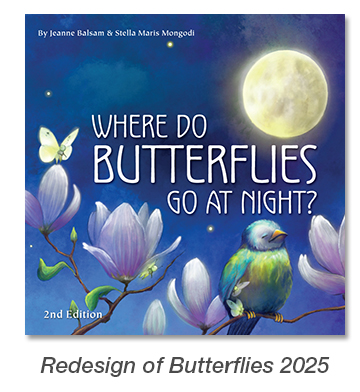
One of the important changes I made in a redesign was to make it more clear what the book is about by rebalancing the title text. In the initial cover, the book’s subject is unclear unless you come up close. I added 2nd Edition to my redesigned book, so it was known that this was not the same publisher, and also enlarged the names of the author (me) and illustrator (Stella Maris Mongodi).

I also set up the interior of the book to more closely resemble a traditional picture book. One of those additions was a half-title page. I also included a dedication page up front, and bios for Stella and me in the back, none of which were included in the original book, but which I felt deserved to be there.

The book also has back matter, providing information about butterflies, their importance as pollinators, and ways a child reader can help them, thereby making a difference in the world. I redesigned this spread to make it lighter and more readable.

One of the greatest challenges in redesigning “Butterflies” was recreating Stella’s beautiful art into a different size and format., as mentioned above. Here I am deeply grateful for my artistic talent which enabled me to make these changes, and to Stella, who was willing, with her approval along the way, for me to make the changes to her original art.

This sometimes required cropping from the outer edges of the spreads, but often cropping from the inner edges where the outside needed to remain intact, and digital repainting to make it all work. My goal here was to make the final book look like that’s exactly how Stella created it. One of our favorite spreads is below. Hopefully you can’t tell what may be missing from the original spread!

And so ends the tour of what a redesign looks like, the challenges and happy results. If interested in a redesign of one of your projects (need not be a book), please feel free to contact me.

If interested in purchasing Where Do Butterflies Go at Night, 2nd Edition you can find it here on Amazon.
Fundraising – Premiums

Fundraising is a critical part of any non-profit’s functioning. Without it, all the dedication and inspiration in the world can come to naught if the funds to back your efforts are not there.

One tool in the fundraiser’s toolbox is premiums. They can be included in a donor or cold mailing, or a simple mailing can be designed around them.

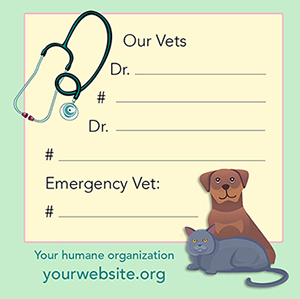
Pictured is a fridge magnet I created for a humane organization I worked for, included in both a donor and cold mailing. While pet parents likely have this information in their phones, others such as pet sitters, firefighters, and neighbors may not. In case of emergency, having this information easily accessible could save a pet’s life.

A magnet is just one possibility for a premium; other possibilities include bookmarks, seed packets, key chains, etc. What are your fundraising needs? As a graphic designer who has fund-raised in the non-profit field for 30+ years, I’d be happy to help you come up with premiums or entire programs to support your wonderful efforts.

Questions? Please contact me.

Traditional Publishing vs. Self-Publishing — Which Way to Go?

There are often two schools of thought on this, and there are two very different processes. In the end, there is the same product, a book that you have invested a great deal of time in writing, possibly illustrating, and a significant part of your heart. So how do you know which way to go?

In my talk, “Self-Publishing Children’s Books 101”, I introduce the numerous concepts and responsibilities involved in producing your own picture book. This gives you a solid starting point for further investigation.

I also discuss the advantages and disadvantages of going the traditional or self-publishing route. Here are a few questions you may want to ask yourself before embarking on your publishing journey.

  • Why are you writing your book? Do you want to reach a very broad audience or perhaps a smaller niche group of readers? Traditional publishers will reach the broadest audience, but also look for more mainstream subjects.
  • Is it important for your book to be in bookstores and libraries, as well as online? If yes, a traditional route may serve you better.
  • How much control would you like? If you have a strong vision of exactly how you want the illustrations, cover, and design, etc. to appear, self-publishing may be for you.
  • How much responsibility do you want to take for every aspect of the book’s journey – from writing, editing, design, illustration, marketing, and finding the people who will help you with these skills or learning them yourself? This speaks self-publishing; a traditional publisher will take care of all these for you.
  • How much financial investment do you wish to make? This is simply reality. If you self-publish, you will be paying for illustrators and designers to help you as well as the cost of printing the book. In today’s market, this will run several thousand dollars or more. There are no real out-of-pocket expenses involved in traditional publishing.
  • How patient are you? Querying agents and those publishers that are still open to submissions involves both research and generally, long waits to hear back. Want your book out there right away? Self-publishing is the way to go.

These are just some of the points you may want to consider. Hopefully, I’ve got you thinking about options for your upcoming children’s book. Do your homework, and read and research thoroughly!

If I can give a presentation on “Self-Publishing Children’s Books 101” at your library, school, or other venue, please contact me.

2024 – Ready to Self-Publish?

You have a story. Perhaps you have illustrated it. And you want to see your children’s book in print. You have submitted to publishers, but so far, have not gotten a `yes’. Time is slipping by and you’re not quite sure what to do.

Maybe it’s time to self-publish. Working with an experienced graphic designer who is also a published children’s book author and illustrator might be one of the best steps you can take to finally see your book in print.

I love helping authors bring their stories to children (and adults) who are waiting to hear what you have in your mind and heart. It’s a journey we share together with the best possible results – your story in a beautiful book.

Learn about how I help authors self-publish, and contact me when you’re ready to make your dream a reality.

Poem

Be Remembered

We are often in a situation when you want to give the person you’re speaking with something to remember you by. Even in our digital age, print has a place.

Above you see three projects I recently completed for a client. Dr. Silverstein is expanding the promotion of her business and needed a new business card, but first she needed something else … a new logo. The new logo I created is now incorporated nicely into her new business card and other promotional avenues.

My client’s first book is being published this September. I was happy to research just the right images and design a bookmark that lets potential readers/purchasers know all about it.

A bookmark should always be tucked into your book at every possible opportunity, but also given out freely to anyone with whom you discuss your book. It easily becomes your best and simplest advertising promotion. You are, after all, talking to readers! Use a business card when you discuss the nature of your business for something that easily tucks into a pocket.

Good design is how they’ll remember you. If I can help you be remembered, please contact me.

Much More than Just Being Printed

To be realistic, self-publishing a children’s book is a lot of work. Depending upon what talents you bring to the table yourself, it also involves a lot of coordination of other people – an editor, if needed, an illustrator, and a graphic designer, at the least.

But getting the book finished and to press is only one part of the work. You still have to market your book! This is something you want to do for a traditionally published book as well, in addition to the publisher promoting you.

Some of the promotion needs to be ahead of the book’s release, and some after, but the bottom line is if you want your book to sell, be prepared to market it.

There’s plenty of in-depth information online about how to market, so here, I’m, going to offer you a few ideas that you might want to look into.

  • Reviews – if you want reviews, send your book in whatever format is required to reviewers in advance of the release. For some, like Kirkus, you will need to pay for a review. But you can also research bloggers who specialize in the genre, age-group and/or subject matter of your book and request online reviews.
  • Bookmarks – have these designed, printed, and ready to use in any of your promotions/mailings and to share with people you meet.You’ll also want to tuck a bookmark into each book you sell.
  • Press releases – these can be sent to local or national publications, aligned with your book’s subject matter, if appropriate. Be prepared to send PDFs by email or hard copies, whatever they require.
  • Events – look for events coming up where you and your book will be a good fit – book fairs, author events, or aligned fields of interest.
  • School visits – research and approach the schools in your area and further afield where you’re willing to travel to see if you might do school visits, and prepare to do presentations.
  • Book launch/book signings – ask your local bookstore or other similar venue if they would host you and a book signing.
  • Special mailings – reach out to organizations aligned with your subject matter and who might be willing to carry your book.

Keep in mind that, while self-published books have gained in both popularity and recognition, they are still not always accepted as the equivalent of a traditionally published book. Marketing is essential to sell books, so be prepared to learn and take the steps necessary to see your books in children’s hands!

Above, you see numerous ways I have been promoting my own picture book, Where Do Butterflies Go at Night?. I’ve sent a postcard mailing to butterfly gardens, a letter to local schools, am attending a crafts fair (again) with my book, making school visits, and very importantly, I designed my bookmarks which I give out every chance I get!

How can I help you? Please contact me, and let me know!

p.s. Where Do Butterflies Go at Night? is available at select book stores and everywhere books are sold online.

Workshop

Can I do a workshop for you?

As a published author and illustrator, graphic designer, and experienced public speaker, I am available to do a presentation on Self-Publishing 101 for Children’s Books.

I would be more than happy to educate your group on all that is entailed in self-publishing a children’s book. Workshop contents include critical points such as:
* Idea/concept
* Story
* Importance of a dummy
* Design
* Illustration
* Traditional Publishing vs. Self-Publishing

Interested? For complete details please contact me and inquire. I’d love to hear from you!

Please note that workshops need to be in reasonable travel distance from my home. Thank you!

A Functional Business Card (aka Bookmark)

People are still reading. A lot. The New York Times still has a best-seller list; sales on Amazon are doing great; children’s books have increased in sales; and NPR has TV programs about their favorite books each year. What does that mean to you? That promoting your endeavors with a bookmark is still a great idea. Think of it as a functional business card.

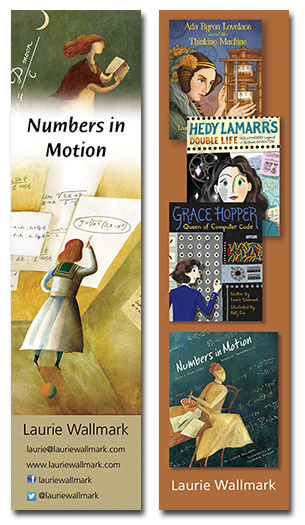
It goes without saying that authors, whether traditionally or self-published, can use this valuable promotional tool and keep themselves in the public’s eye. Laurie Wallmark, author of numerous picture books whose focus is women in STEM, has had the great fortune to have her stories illustrated by some excellent artists. Her most recently published book is Numbers in Motion about the mathematician Sophie Kowalevski, illustrated by Yevgenia Nayberg. I am the lucky person who designs Laurie’s bookmarks, and this one was a real treat because I am just enamored of the art.

I chose vignettes from two of Yevgenia’s  illustrations plus Laurie’s web presence for one side, and all of her published books to date, including the book cover slightly larger, on the reverse. The result is a visually pleasing collection of beautiful illustrations, an invitation to learn about this book, and the others as well. You can do the same at Laurie’s website.

But what if you’re not an author? Is there something you do that you want to promote?

An example here is my own shop on Etsy which focuses on a growing collection of cards and other items for the French Bulldog. Any books? Not a one. But does every sold item I send out have a promotional bookmark tucked in? You bet!

And I’m hoping that buyers from my Etsy Frenchie art shop may use and enjoy that bookmark and come back and visit, even if just to check and see what’s new in cute Frenchie stuff.

One of the beauty of bookmarks? They are not terribly expensive and can be produced by any number of reputable online printers.

Another wonderful use for a bookmark is for your organization. In this regard, I’m thinking particularly of non-profits, but if the design is appealing and provides the recipient with the information and inspiration to check out a company’s website and/or social media, then it’s worth it!

Pictured here is a bookmark I designed for the Associated Humane Societies and Popcorn Park Refuge here In NJ. It was part of a larger fundraising appeal I created and I do believe that this lovely bookmark had something to do with the results being much better than the year prior. Who can resist a (shelter) dog putting his paw in your hand? Or one of the refuge tigers napping on a sunny rock?

Here’s the bottom line. Although we live in a very digital world, people are still reading. There are also some programs available for the “lay person” to create their own promotional materials. I have seen some excellent examples from some talented people, and some that are truly cringeworthy. The thing is … you want to be remembered positively. If beautifully done graphic design is not your area of expertise, don’t put out something half-baked.

Get great results with a pro … and here I am! Just contact me – I’m happy to help!


Growing in Our Fields of Interest

One of the things that’s important in any field we care about is growth. Are you growing in what you do, in what you care about, in where you want to go?

Based on the true story of the author’s Frenchie who defied the odds in agility

To this end, I think learning more and being involved is important in our being the best we can be, no matter what our interest, professional or otherwise. I am a regular attendee at SCBWI events (more on this sometime soon), but recently had the pleasure of being a guest speaker on a panel for an Animal Writers Workshop. Obviously, the commonality shared by both speakers and participants was our love of animals and writing. My fellow speakers shared their experiences in their writing process, road to publication, inspiration, and the difference in writing for a non-fiction vs. fiction reading audience and more. I spoke on the importance of good graphic design in self-publishing.

Flyer/program cover for the workshop, my design

With so many aspiring writers and illustrators turning to self-publishing nowadays – in addition to or instead of traditional publishing – there are new challenges to be faced. One of them is the importance of a well-designed product, which is where I, as a graphic artist, come in. My talk focused on some of the elements of good graphic design and how they come together to create an appealing book, and especially an appealing cover. I stressed how hiring a good graphic designer is every bit as important as a good illustrator, editor, and printer in publishing.

An adult novel from the point of view of the horse that changed the author’s life.

In a highly competitive field, now expanded due to self-publishing, you have literally seconds to grab the attention of a potential purchaser. A good portion of my talk included show-and-tell using examples to make my points. I brought along a bunch of particularly attractive children’s books from my own collection, had my fellow panelists hold up their well-designed books, and also showed a couple from my local library where I had tasked our librarian to find me some samples of poorly designed covers. I knew we had the right examples when I held up one of them and there were audible gasps from the audience!

It was a fun talk to an interested and interesting audience, with more opportunity for discussion afterwards at tables in an Authors Alley. Panelists and additional writers were  set up for book signings and a get-to-know with attendees.  What made this event so much fun was the sharing of experiences with fellow writers whose passion was our love of animals. Certainly, I had plenty to share, but I also found plenty to learn. And that’s what makes workshops and conferences both fun and important in our lives.

One of the books published by the event coordinator and moderator

If you have a dream, a passion, I encourage you to find opportunities to expand your knowledge and connect with others who share that passion. You will grow in many ways, some unexpected, and be inspired. Of course, if I can help you bring your dreams into fabulous visual format, just contact me and I’ll be happy to help.


Bookmarks for Everyone

While bookmarks are clearly a natural fit for authors, they’re also great for all kinds of organizations, both profit and non-profit alike. As mentioned in an earlier post, people ARE still reading books!

And people notoriously love little giveaways. So why not have a bookmark made up for your shop? A bookshop? Well, a double bonus, of course, but any smaller, special interest shop will do well to tuck a bookmark in your customer’s bag. It will remind your customer of the wonderful goodies in your shop, your helpful staff, and the lovely area they visited when they found you. All that in an attractive item that is relatively inexpensive to produce from start to finish.


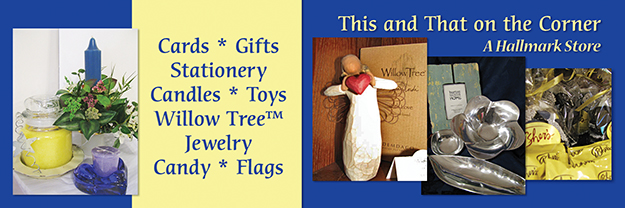
Pictured here is a bookmark I made up for a sweet little gift shop nearby. Sadly, this business is no longer, but the owner faithfully tucked the bookmark into each customer’s bag, a warm little invitation to “please come again” all on its own. I suggested she holepunch one end and slip in and knot a ribbon, which makes an even more effective place keeper.

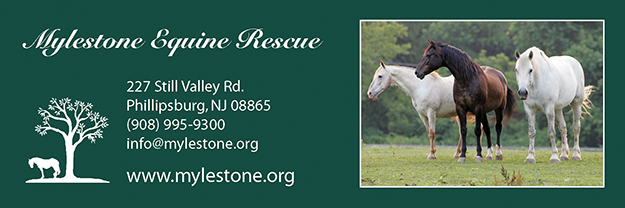
What about if you’re a non-profit? What better way to keep your cause, your mission, in front of potential donors’ eyes? A bookmark can pack a lot of punch in a small space and provide great imagery that speaks volumes. I designed this bookmark for Mylestone Equine Rescue, an organization I’ve worked with for many years. It provides the basic contact information for the rescue and photos of the horses that are now looking fabulous thanks to their efforts. How simple is this? And who wouldn’t want to keep it, check in on their website, or make a donation?

Bookmarks are a great, simple, and effective way for businesses to make their mark, whether profit or non-profit. And all without breaking the bank. If you think a bookmark would help your mission, please contact me and let me know.